When I first looked at Las Meninas by Diego Velázquez, I had a strange sensation:
I was not looking at the painting.
The painting was looking at me.
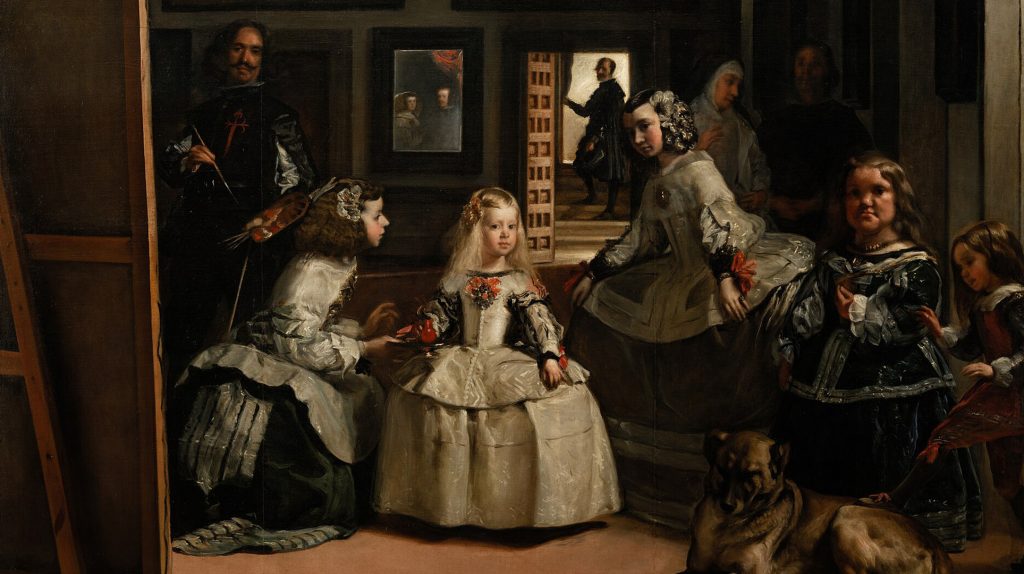
And the more I examined it, the more clearly I realised:
I was not a spectator.
I was inside.
I stood in the room, I heard the breath of the characters,
I felt the falling light.
And somewhere behind me — the king and queen.
But they are not in the centre.
And neither is the painter.
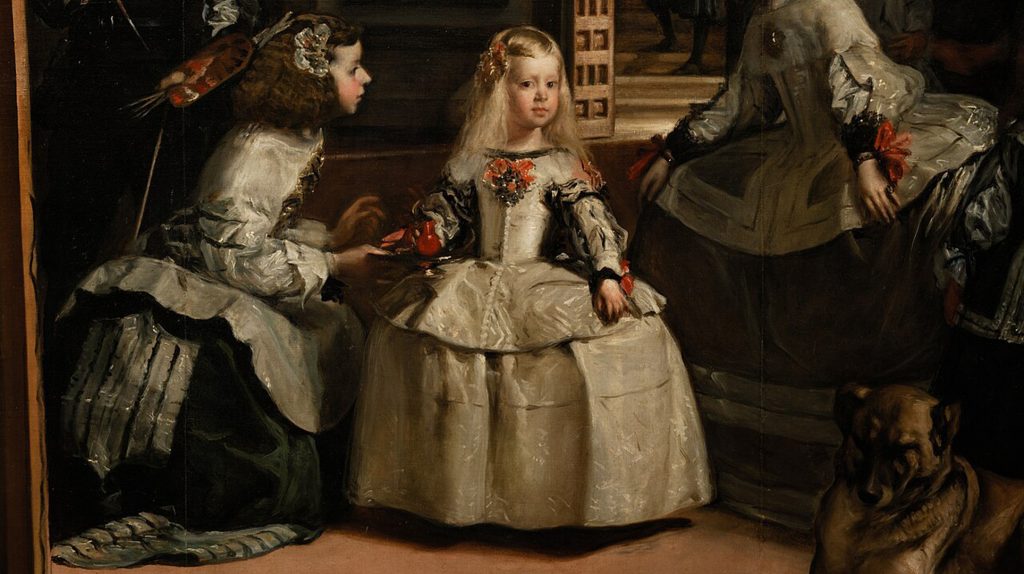
In the centre stands the Infanta.
And the entire space is arranged around her.
The location — the studio of the Alcázar palace in Madrid.
So this is not simply an interior.
It is a place where the image of power is created.
Eleven figures.
The composition is constructed so that you feel as if you’ve entered the scene.
You are not before it — you are within, between two worlds.
In front of you — the Infanta, the attendants, the painter, the dwarf.
And behind your back — the royal couple, reflected in a mirror.
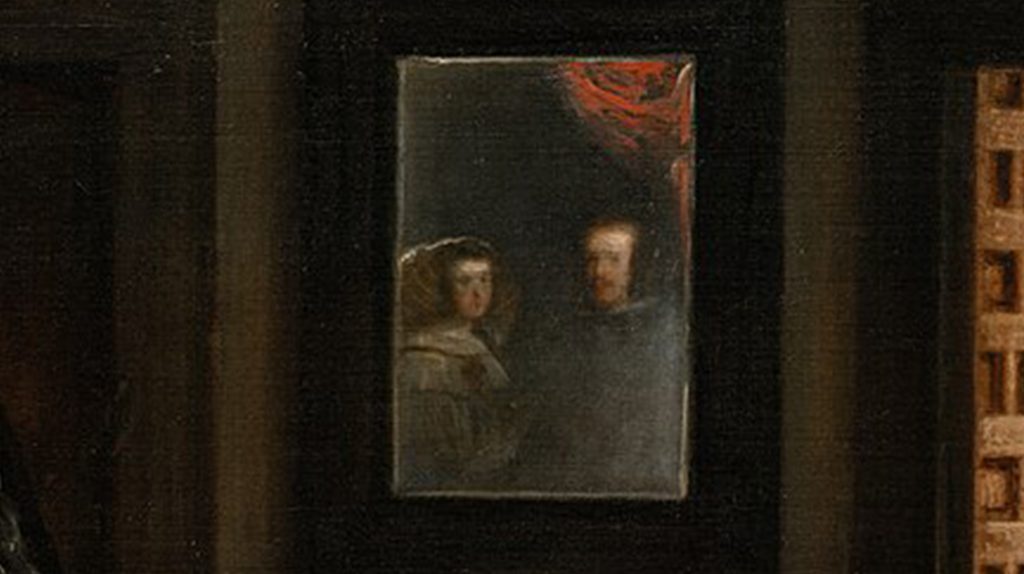
I don’t feel myself in the place of the king, as many interpret.
No.
I am between.
I am within that space.
And the painter — he does not just look aside.
He looks through me.
I catch the glance of María Barbola.
The light — chiefly from the right.
It picks out the Infanta, Velázquez, parts of the floor.
And the rear room is immersed in semi‑darkness.
This creates not just depth —
but almost a cinematic illusion of real time.
As though I had stepped into a second which has lasted 400 years.
The palette is restrained.
Grey‑ochre tones, accents of white and soft pink —
for example in the Infanta’s dress.
And the nearly black, dense background — like a space without time.
Who is she — the girl in the centre?
The Infanta María Teresa. She is about five.
Daughter of Philip IV and Mariana of Austria.
She is not central because she is brighter —
but because the whole world of the painting exists around her.
But she is not free.
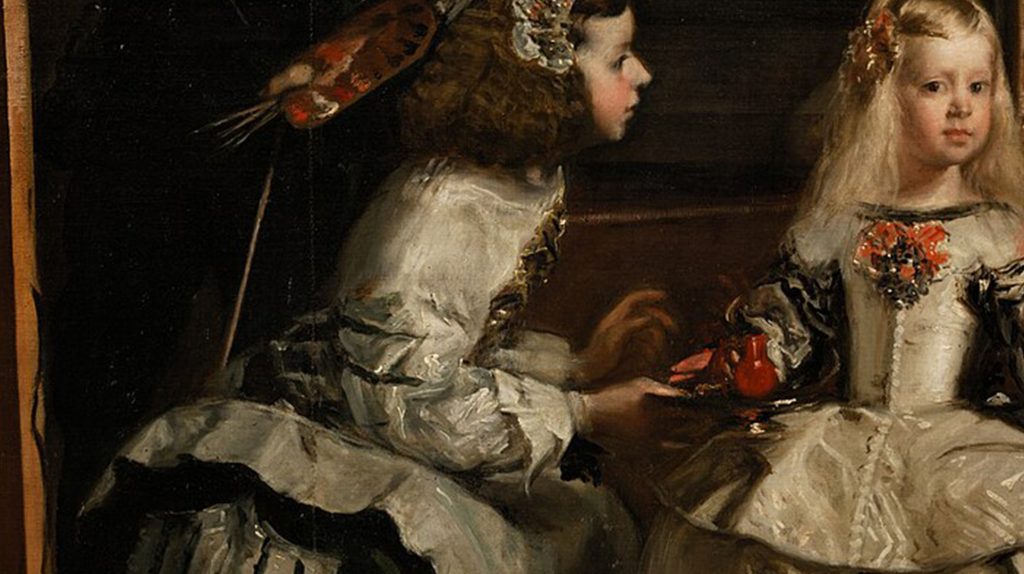
Royal children of that time were almost… museum pieces.
They were handed everything.
They were told everything — when to rise, what to say, when to drink.
And one of the meninas kneels, offering a jug of water —
and this is not simply an act of courtesy.
It is a ceremony.
The Infanta cannot just take it herself.
Even in that — there is ritual.
What stays with me most is María Barbola.
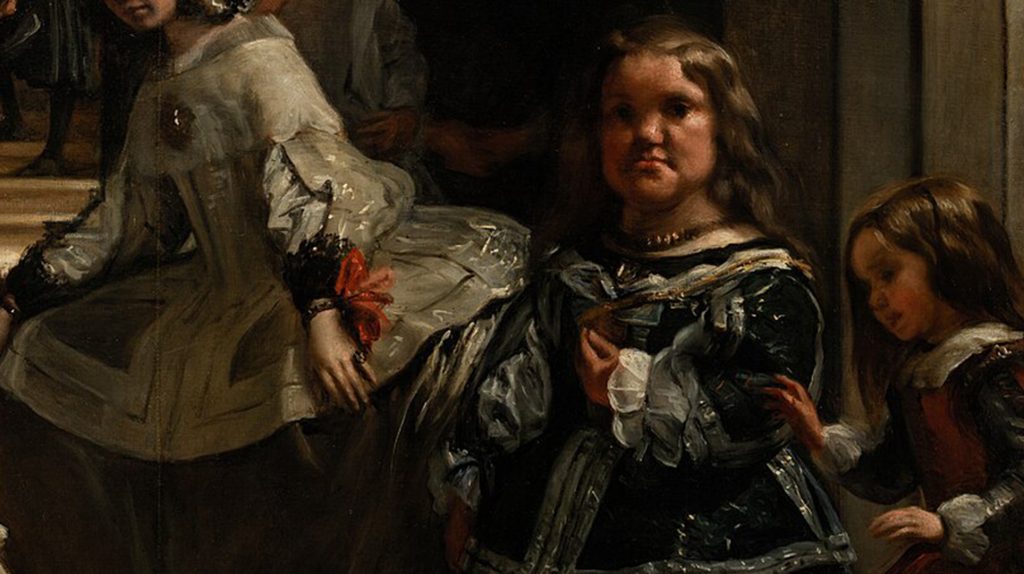
She stands upright, does not kneel, does not bustle.
With dignity.
Her gaze is among the most piercing in the scene.
She is a dwarf, of German or Tyrolean origin.
But Velázquez does not paint a “court jester” type.
He paints a person.
She looks straight.
And in that look — some weight, some understanding, some equilibrium.
As if she alone knows what is really going on.
And it seems to me she is not a peripheral character.
She is part of the central nervous system of the painting.
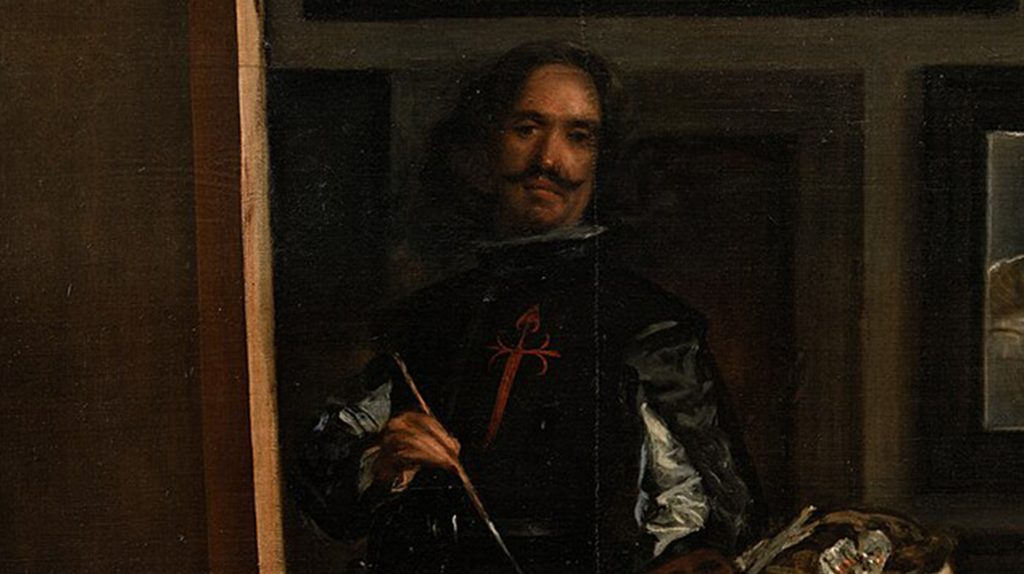
In the 17th century, painters were ranked below the nobility.
Yet Velázquez places himself at the centre.
With a brush. At work.
His canvas higher than all figures.
I dare to suggest that this is a symbol of art rising above every rank and hierarchy.
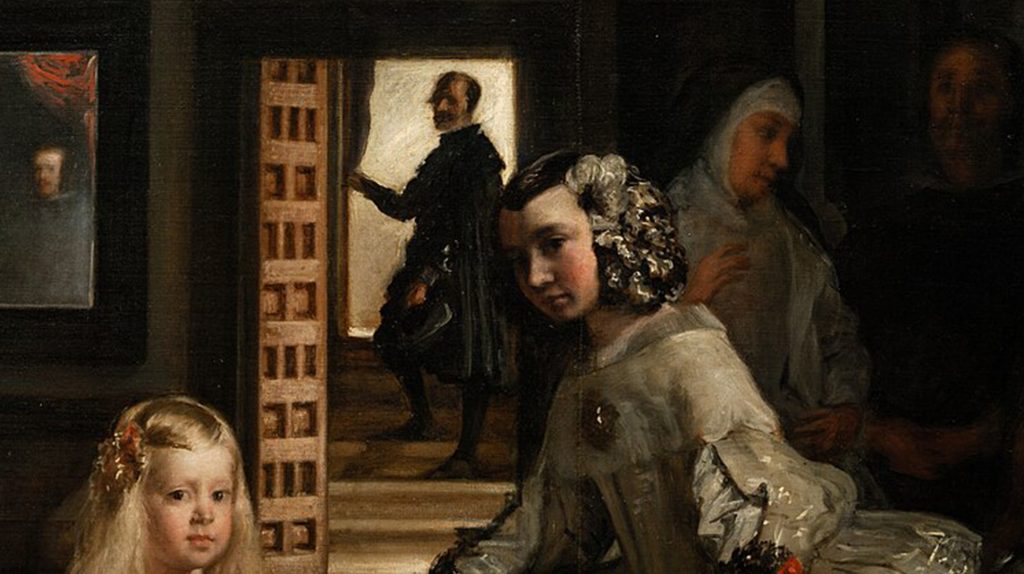
In the quiet depth of the room, there is a small but powerful moment unfolding at the back —
a man paused in a doorway, bathed in light.
He feels almost weightless, suspended between staying and leaving.
That open door draws my gaze again and again.
It feels like an invitation.
As if the painting is whispering that this scene is not complete — that life continues beyond the canvas.
The doorway becomes more than architecture; it becomes a threshold.
A passage between presence and absence, between what we see and what we imagine.
Sometimes I feel that if we stepped through that door,
we would enter another version of the story — one that exists just outside our reach.